
Tidy: House Cleaning Schedule
Artem ChakhouskiHouse & Home
4.232.00 Reviews
- Version
- 5.0.0
- Installs
- 100.00K
- Age Rating
- Everyone
Screenshots

Our Review of Tidy: House Cleaning Schedule
 Analysis by Appyee
I use a cleaning schedule most when the mess is not urgent but keeps nagging at me: the bathroom needs attention, laundry has piled up, and I cannot remember when I last cleaned the fridge shelf. Tidy: House Cleaning Schedule is aimed at that in-between problem. It gives household chores a place to live so I can decide what to do next instead of trying to keep every task in my head.
That focus makes it different from a timer or a one-off checklist. The point is not to clean faster at any cost; it is to make recurring jobs easier to remember and spread them across ordinary days. I would look at Tidy as a lightweight household organizer, especially if the chores that slip are the small, repeatable ones rather than a big seasonal clean.
Speed expectations: less planning, not instant cleaning
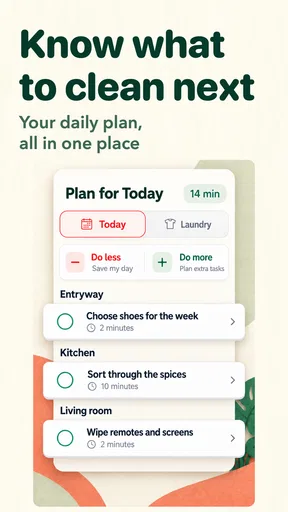
The app’s value is mostly in reducing the time I spend figuring out what needs doing. Once I have a routine that reflects my home, I can check the plan and pick a task without rebuilding a list every morning. That can make the start of a chore feel quicker, though it cannot shorten the physical work itself or make a busy week magically less busy.
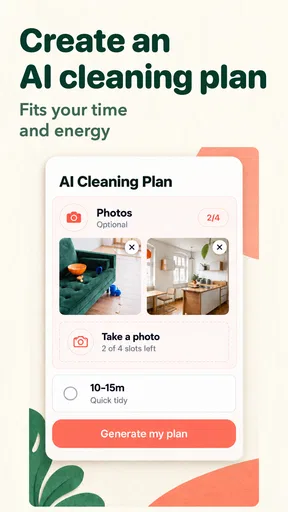
Setup is an important part of that trade-off. Tidy asks about the home and cleaning preferences so it can suggest a schedule; I would spend a little time making those choices thoughtfully rather than accepting a plan that feels too ambitious. A schedule that is realistic is faster to use because I am less likely to ignore it, edit it repeatedly, or feel behind before I begin.
Heavy-use moments: keeping a household on the same page
The app is most useful when several people share chores or when a single person is juggling work, family, and home maintenance. Reminders can bring a task back into view, while a shared view of responsibilities can help housemates avoid doing the same job twice—or assuming someone else has already done it.
For example, imagine a weekday evening when one person has time to wipe down the kitchen and another is handling the bathroom. A shared schedule gives everyone a clearer sense of what is pending, rather than relying on a vague conversation or a note that only one person remembers to update. I would still agree on who owns each task: visibility helps coordination, but it does not settle disagreements about what “clean enough” means.
Reliability: routines work only when they feel fair
Cleaning apps can become another source of nagging if every overdue task stays visible and the plan assumes the household has unlimited time. I would treat Tidy’s schedule as a guide, not a scorecard. If a week gets hectic, adjusting the plan is more useful than letting a backlog make the app feel like a list of failures.
That is also why I would start with only the chores I genuinely want help remembering. Adding every possible job at once may look thorough, but a crowded schedule can make reminders easier to tune out. A smaller routine—then adding tasks when it feels comfortable—is a practical way to make the app more dependable in daily use.
Device constraints and the cost of extra features
Tidy is a free House & Home app from developer Artem Chakhouski, with a 4.2 average from around 1,400 ratings and over 100,000 installs. It is rated for Everyone, and its current version is 4.0.4. That broad audience suits a home routine tool: you do not need to be an experienced organizer to understand why recurring chores and reminders might help.
The app’s listed minimum operating-system requirement is version 7.0, so it is not restricted to only the newest devices. I would still check that my phone can run it comfortably and that reminders fit the way I manage notifications. If I silence most alerts, a reminder-based routine may not help much; checking the schedule as part of an existing morning or evening habit could be a better fit.
The download is free, with in-app purchases ranging from $3.99 to $14.99 per item. I would begin with the free experience and decide whether the paid options solve a real problem for my household before spending anything. The app is not automatically worth paying for just because a chore list is useful; the value depends on whether its extra options make the routine easier for you.
A Friend in Your Pocket
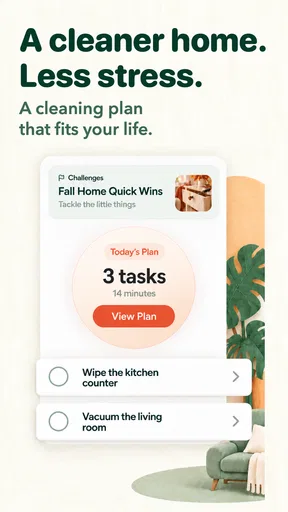
When I first downloaded Tidy: House Cleaning Schedule, I was skeptical. I mean, could an app really help me manage my cleaning tasks better than my trusty old checklist? But after giving it a go, I found myself pleasantly surprised. The app’s interface is user-friendly, making it feel like a breeze to navigate through its features. It’s designed to help you create a personalized cleaning schedule that fits your lifestyle, and trust me, it does exactly that.
Getting Started
Setting up the app was straightforward. You start by entering details about your home, like the number of rooms and your cleaning preferences. The app then suggests a cleaning schedule tailored just for you. It’s almost like magic how it takes your inputs and crafts a plan that feels personal and manageable. Plus, you can easily tweak it to fit unexpected changes in your routine.
Features That Stand Out
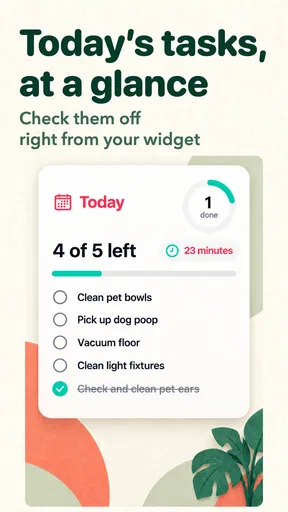
One of my favorite features has to be the task reminders. Let’s face it, life gets busy, and it’s easy to forget when it’s time to dust those shelves or mop the floors. But with Tidy, you get timely reminders that keep you on track. It’s like having a gentle nudge that says, “Hey, it’s time to get moving!”
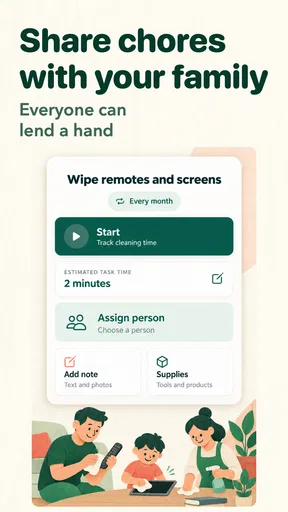
Another cool feature is the ability to synchronize tasks with family members. This is a game-changer if you’re living with roommates or family. Everyone can see what needs to be done and when, reducing the chances of chores being overlooked or duplicated. It’s a win-win for household harmony.
Why You’ll Love It
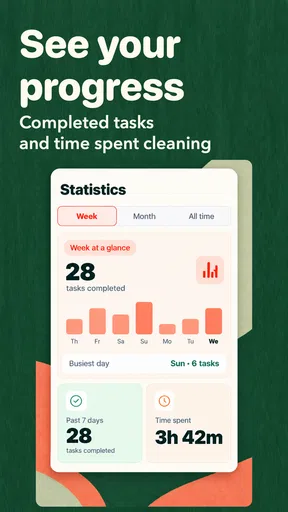
If you’re someone who loves organizing and ticking off tasks from a list, this app will feel like a dream come true. It transforms the mundane task of cleaning into something much more engaging. Plus, there’s a certain satisfaction in seeing your progress over time – which the app tracks beautifully.
Not to mention, Tidy: House Cleaning Schedule offers tips and tricks to make cleaning more efficient. It’s like having a mini advice column on how to tackle those stubborn cleaning challenges right at your fingertips.
Room for Improvement
While the app is pretty fantastic, there’s always room for improvement. I found myself wishing for a feature that could integrate with my smart home devices. Imagine telling your home assistant to check your cleaning schedule for the day – now that would be a futuristic touch!
Also, while the app is free to download, some features are locked behind a premium subscription. This can be a bit of a bummer if you’re on a tight budget, but the free version is still quite capable.
Final Thoughts
In a nutshell, Tidy: House Cleaning Schedule is a fantastic tool for anyone looking to bring a bit more order into their cleaning routine. It’s like having a personal cleaning assistant without the hefty cost. Whether you’re a cleaning enthusiast or someone who dreads chores, this app makes the process a whole lot easier and dare I say, fun.
If you’re ready to take the plunge and transform your cleaning habits, give Tidy a try. You might just find yourself enjoying the process a bit more, and who knows, your home might thank you for it!
Where a dedicated cleaning schedule beats a general list
A notes app or paper checklist is still a sensible alternative if I only need to remember a handful of jobs. Those options are quick to customize and do not ask me to adopt a separate routine. Tidy makes more sense when recurring chores are easy to forget, when different rooms need attention at different intervals, or when a household benefits from everyone seeing the same plan. The trade-off is that a purpose-built schedule asks me to maintain it; a scrap of paper can be less capable but also less demanding.
I would not choose Tidy as a substitute for a shared calendar when the main challenge is coordinating appointments, nor as a home inventory tool when I need to track supplies or repairs. Its strength is housekeeping organization. Keeping that boundary clear prevents the schedule from turning into a catch-all system that is harder to maintain than the chores themselves.
A practical way to make the routine stick
One useful approach is to begin with the tasks that cause the most friction, not the ones that sound impressive on a cleaning plan. If I routinely forget to change bed linens or clean a particular room, I would put those jobs into the routine first and leave occasional deep-cleaning tasks for later. This makes the first version easier to follow and helps reveal whether the suggested cadence actually matches my home.
I would also connect reminders to a moment when I can realistically act. A notification arriving during a commute or a meeting is easy to dismiss; a check-in around the time I usually tidy the kitchen is more actionable. If I cannot do a task when prompted, I would adjust the plan rather than repeatedly postponing it without thought. That small distinction helps keep reminders useful instead of turning them into background noise.
For a household, I would agree on task ownership before relying on a shared schedule. One person might interpret “clean the kitchen” as wiping counters, while another expects the sink and floor to be included. Breaking the work into clear, familiar chores can prevent the shared list from creating arguments about what was meant. Tidy can make responsibilities visible, but a brief conversation is still what makes the division fair.
Who will appreciate it—and who may not
I think Tidy is a good match for people who want structure but do not want to design an elaborate system from scratch. It can also help someone who is moving into a new place, sharing a home, or trying to distribute small jobs across the week instead of losing a whole weekend to catch-up cleaning. The most convincing use case is not a spotless show home; it is a home where a few recurring tasks keep being forgotten.
On the other hand, I would skip it if I already have a reliable paper routine, dislike notifications, or prefer to decide each day based on what looks dirty. It may also feel like overhead for someone who hires help for regular cleaning or has very few recurring chores. In those situations, a simple note or calendar entry may be quicker, and there is little benefit in maintaining a second system.
What to expect from everyday performance
For a housekeeping tool, I care less about flashy motion and more about whether I can open the app, understand the next task, and get back to my day. The interface felt straightforward to me, and the work is mainly organizing a routine rather than processing large media or complex files. I would not expect it to transform an older phone into a faster one, but the app’s basic purpose is modest enough that speed is unlikely to be the main reason to choose or reject it.
Reliability also depends on the routine around the app. If reminders are allowed to reach me and I check the schedule regularly, the app has a better chance of helping; if I routinely dismiss alerts, it cannot make me act. I would keep the plan manageable and review it after a change in household routine, such as a new roommate or a shift in work hours. That is a more realistic form of recovery than trying to catch up on every missed task at once.
The app is not the right choice for someone who expects voice control through smart-home devices, since I would prefer a connected setup for hands-free access. Nor would I rely on it as the only place for urgent household responsibilities. For routine cleaning, however, a visible plan and shared chores can be enough to reduce the mental load without turning home care into a complicated project.
My performance verdict
My overall view is that Tidy’s value comes from consistency, not technical spectacle. It helps turn “I should clean that sometime” into a more visible next step, and its schedule can be adjusted when real life changes. The main friction is the attention any reminder system requires, along with the need to keep a shared plan clear and fair. Start small, test whether the cadence suits your home, and use the free version before considering any purchase. If that simple structure makes chores easier to begin, this is a useful housekeeping companion; if you prefer spontaneous cleaning or already have a system that works, you can comfortably skip it.
Verdict
Strengths of Tidy: House Cleaning Schedule
- User-friendly interface for easy navigation.
- Customizable cleaning schedules.
- Reminders help you stay on track.
- Syncs across multiple devices seamlessly.
- Provides cleaning tips for efficiency.
Limitations of Tidy: House Cleaning Schedule
- Limited features in the free version.
- Occasional sync issues reported.
- No offline mode available.
- Ads can be intrusive at times.
- Requires account login to use.
Similar Picks in This Category
View All
Universal TV Remote Control
CodeMatics Media Solutions3.9

AlfredCamera Home Security app
Alfred Systems Inc.4.7

Planner 5D: AI Home Design
Planner 5D4.5

Universal Tv Remote-Cast to TV
One Music Player4.1

Zillow: Homes for Sale & Rent
Zillow Group4.8

99acres Buy/Rent/Sell Property
infoedge.com4.3
Frequently Asked Questions
What is the primary function of Tidy: House Cleaning Schedule?
Tidy: House Cleaning Schedule is designed to help users organize and manage their household cleaning tasks efficiently. The app allows you to create customized cleaning schedules, set reminders, and track your progress. It ensures that no task is forgotten and helps maintain a clean and organized home environment.
Is Tidy free to use, or does it have any in-app purchases?
Tidy offers a free version with basic features that cater to most users' needs. However, it also provides premium features through in-app purchases. These may include advanced scheduling options, syncing across multiple devices, and personalized cleaning tips. Users can choose to upgrade based on their specific needs.
Can Tidy be used for scheduling tasks for multiple users in the same household?
Yes, Tidy supports multiple user profiles, allowing each member of the household to have their own schedule. It facilitates collaboration and ensures that everyone is aware of their responsibilities. The app also enables sharing of tasks, which is perfect for families or roommates who share cleaning duties.
Does Tidy integrate with other apps or smart home devices?
Tidy can integrate with popular calendars and reminders apps, providing seamless synchronization of tasks across platforms. Additionally, it may support integration with certain smart home devices, enabling voice-activated reminders and task updates through smart speakers, enhancing the user experience.
How customizable is the cleaning schedule within Tidy?
Tidy offers high customization for cleaning schedules. Users can set daily, weekly, or monthly tasks, assign specific times, and categorize tasks by room or type. The app also allows you to prioritize tasks and receive notifications, ensuring that your cleaning routine fits your lifestyle and preferences.
